Reputation Management in India: How to Protect and Build Your Brand Online in 2026
Your reputation online determines whether a potential client calls you or your competitor. In India, where word-of-mouth has always carried more weight than advertising, online reputation is the digital equivalent – and it operates at a scale that no amount of traditional goodwill can offset if it goes wrong.
This guide covers what online reputation management actually involves for Indian businesses, what specific threats exist in 2026, and how to build a proactive reputation strategy rather than a reactive one.
What Online Reputation Management Means for Indian Businesses
Online reputation management (ORM) is the practice of monitoring, shaping, and improving how a business or individual appears across digital channels – search engine results, review platforms, social media, news, and any other publicly visible digital touchpoint.
For Indian businesses, the channels that matter most are Google Business Profile reviews (which appear directly in search results and Maps), Justdial and Sulekha listings, MouthShut and other Indian review platforms, LinkedIn (especially for B2B companies and professionals), and the first page of Google results for your brand name. For larger businesses, YouTube, news media, and Wikipedia also become relevant.
The stakes are high because most Indian consumers research a business online before making contact. For a business in Jaipur with four-star ratings across 200 reviews, the conversion rate from search to enquiry is significantly higher than a business with three stars across ten reviews – regardless of actual service quality. Perception precedes reality in digital markets.
The Most Common Reputation Problems for Indian Businesses in 2026
Negative Google Reviews Without Responses
A single unanswered negative Google review visible in Maps or local search results causes disproportionate damage. Indian consumers interpret the absence of a response as confirmation that the complaint is valid and that the business does not care. A well-worded, professional response to a negative review – even one that cannot resolve the underlying issue – demonstrates accountability and often reduces the impact of the review on potential customers.
The response also matters for the review’s presence in search. Google’s algorithm considers review response rates as a signal of business activity and engagement. Businesses that respond to reviews consistently rank better in local search results than those that do not, independent of overall star rating.
Negative Content Ranking on the First Page for the Brand Name
When someone searches your business name and finds negative news articles, complaint forum posts, or aggregator listings with poor reviews on the first page, every other marketing effort is undermined. This is particularly common for businesses in financial services, education, real estate, and healthcare in India, where consumer complaint platforms like Consumer Complaints India and Cheater.in receive significant traffic and rank well for brand name searches.
Fixing this requires a search engine reputation management (SERM) strategy – creating and optimizing enough positive content that negative results get pushed off the first page. This is a medium to long-term process and cannot be done overnight, but it is achievable with consistent effort.
Fake or Competitor-Planted Negative Reviews
The practice of planting fake negative reviews on competitors’ Google Business Profiles is unfortunately common in several Indian business categories – real estate, coaching, digital marketing, and hospitality among them. Google’s review flagging system allows businesses to report reviews that violate its policies (reviews by non-customers, reviews from competitors, spam), but getting these removed is inconsistent and sometimes takes months.
The best defense against fake negative reviews is a high volume of genuine positive reviews. When a business has 400 verified reviews at 4.7 stars, three clearly fake one-star reviews have minimal statistical impact. When the same business has only 30 reviews, three fake ones can drop the average to 3.9 and affect local pack rankings significantly.
Outdated or Incorrect Information Across Directories
Inconsistent NAP (Name, Address, Phone Number) data across Google Business Profile, Justdial, Sulekha, IndiaMART, and other Indian business directories creates two problems: it confuses potential customers who may call an old number or visit a closed location, and it sends conflicting signals to Google that can suppress local search rankings.
An audit of your business listings across all major Indian directories should be performed at least annually, and any time your address or contact information changes.
Building a Proactive Reputation Strategy
Generate a Consistent Volume of Genuine Reviews
The single most impactful reputation management action for most Indian businesses is generating a consistent flow of genuine reviews from real customers. Not by incentivizing reviews (which violates Google’s policies) but by making the review request process systematic.
The most effective method is a simple WhatsApp message sent to every customer immediately after service delivery or product receipt. The message should include a direct link to your Google review page (available through Google Business Profile) and be brief – “Thank you for choosing us. Your feedback helps other customers and helps us improve. Would you mind leaving us a review? [link]”. Response rates from WhatsApp are significantly higher than email for Indian customers.
For businesses with higher transaction volumes, automating review requests through SMS or email can maintain the flow without manual effort. Businesses that send review requests within 24 hours of service delivery consistently get more reviews than those that send them days later when the experience is less fresh.
Respond to Every Review – Positive and Negative
Responding to every Google review – not just negative ones – signals to Google that the business is active and engaged. Positive review responses reinforce the customer relationship and provide an opportunity to include secondary keywords naturally. Negative review responses demonstrate professionalism and accountability.
The structure of an effective negative review response for Indian businesses: acknowledge the experience without dismissing it, offer to investigate or resolve it (move the conversation off the public platform), and end with a forward-looking statement. The response should be written for the audience reading it (potential future customers), not for the reviewer who left the complaint.
Control What Ranks for Your Brand Name
Create and optimize content across platforms you control so that your own properties dominate the first page of results for your brand name search. These properties include your website (homepage should rank first), your Google Business Profile listing, your LinkedIn company page, your YouTube channel (if active), your Facebook business page, and any press mentions or directory listings on authoritative domains.
For the website specifically, a dedicated “About Us” or brand story page optimized for the brand name helps ensure the site earns multiple positions in brand name search results rather than just the homepage.
Monitor Mentions Continuously
Set up Google Alerts for your brand name, key personnel names, and common variations of your business name. This gives you early warning of new negative mentions before they gain significant search ranking. Responding to forum complaints or consumer complaint posts within days of their publication is significantly more effective than responding weeks later when the post may already have rankings.
Reputation Management for Specific Indian Business Categories
Real estate developers and agents in India face particularly intense reputation scrutiny because of the high transaction value and history of project delays. Proactive communication about project timelines, documented delivery records, and RERA registration details visible on the website all contribute to a positive reputation profile that reduces buyer skepticism.
Education institutions – schools, coaching institutes, colleges – are frequently reviewed on platforms like Shiksha.com and CollegeDunia in addition to Google. Actively managing your presence on category-specific platforms is important for this sector.
Healthcare providers face the additional complexity of patient confidentiality when responding to reviews. Responses must acknowledge the feedback without disclosing any patient-specific information. Generic assurances of quality care are less effective than responses that demonstrate a genuine process for addressing concerns.
When Reputation Damage Is Severe: Crisis Management
For businesses facing significant reputation damage – a viral complaint thread, media coverage of a specific incident, or a coordinated negative review campaign – the response strategy requires more than routine ORM practices.
Crisis reputation management involves assessing the severity and spread of the issue, determining whether to respond publicly or privately first, identifying the platforms where the conversation is most active, coordinating a consistent message across all channels, and executing a content strategy to rebuild positive visibility over the following weeks and months.
The worst response to a reputation crisis in India is silence. It allows the narrative to be shaped entirely by others. The second worst response is an aggressive or dismissive public reaction that compounds the original issue.
If your business is dealing with a reputation challenge that requires a structured response plan, our digital marketing team can assess the situation and develop an ORM strategy specific to your circumstances. Book a consultation call and we will give you an honest assessment of the situation and what is achievable.
Frequently Asked Questions
How long does it take to improve online reputation in India?
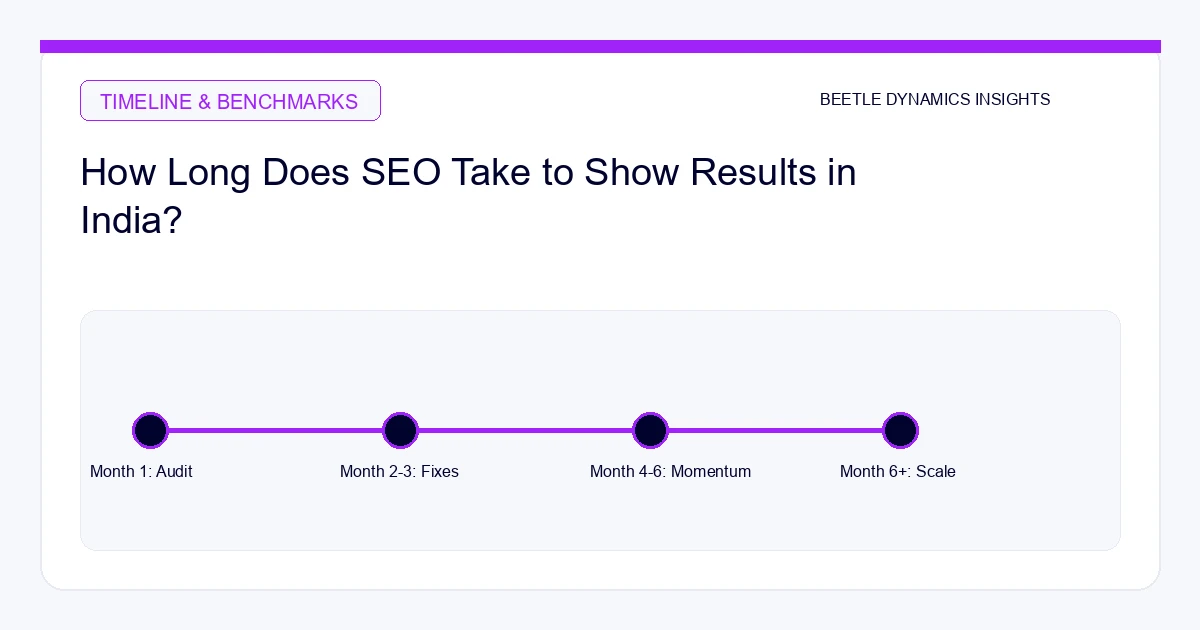
For businesses primarily dealing with negative Google reviews and low star ratings, a systematic review generation campaign can produce measurable improvement within 60 to 90 days. For businesses with negative content ranking on the first page of search results for their brand name, a search engine reputation management strategy typically takes 4 to 9 months to move that content off the first page, depending on how well-established the negative content is. There are no shortcuts that work without risking further harm.
Can negative Google reviews be removed?
Google will remove reviews that violate its policies – reviews from people who were never customers, spam, fake reviews, reviews containing prohibited content like hate speech or personal information, and reviews that appear to be from competitors. Genuine negative reviews from real customers cannot be removed, regardless of how unfair you believe them to be. The correct response to genuine negative reviews is to respond professionally and to generate more genuine positive reviews to dilute their statistical impact.
How do I deal with fake reviews posted by competitors?
Document the reviews by screenshotting them. Flag each one through the Google Maps reporting process, selecting the most appropriate reason (spam, off-topic, conflict of interest). If you have evidence that the reviews are from competitors or non-customers, include that evidence in your flag. Follow up through the Google Business Profile support channel if the reviews are not removed within 30 days. While Google’s process for removing fake reviews can be slow and inconsistent, focusing energy on generating more genuine reviews is simultaneously a better use of time and a more reliable outcome than waiting for removal.
Does responding to reviews improve Google local rankings?
Yes. Google’s local ranking algorithm considers review signals including review quantity, average rating, and review response rate as factors in local pack rankings. Businesses that respond to reviews consistently tend to rank better than businesses with similar ratings that do not respond. The effect is not dramatic for any individual response, but it compounds over time and contributes to overall local search visibility.
What platforms should Indian businesses prioritize for reputation management?
For most Indian businesses, the priority order is: Google Business Profile (highest search visibility impact), Justdial (high Indian consumer traffic for local services), LinkedIn (critical for B2B businesses and professional services), and the first page of Google results for the brand name (requires SERM strategy if negative content is present). Category-specific platforms matter for specific industries: Shiksha for education, Practo for healthcare, MagicBricks and 99acres for real estate, and Zomato/Swiggy for food businesses.